
Bloating after eating: why your stomach feels heavy, and what usually settles it
10 August 2026 · 5 min read
That swollen, tight feeling an hour after a meal is usually mechanical rather than mysterious. Six habits that cause it, and a fortnight that will tell you which one is yours.
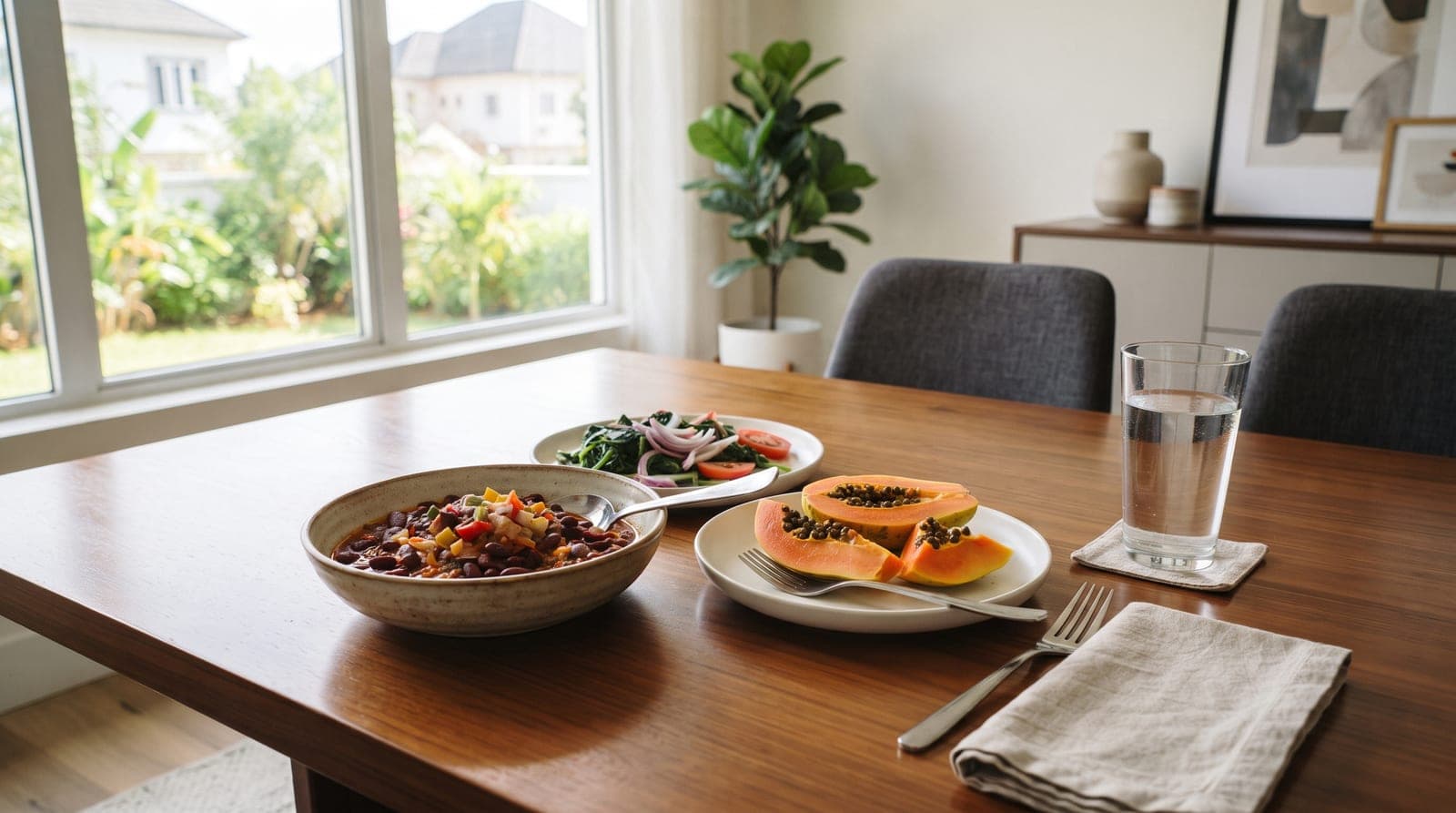
An hour after lunch your waistband is tighter than it was when you put the trousers on. You feel full past the point of satisfaction, slightly swollen, faintly uncomfortable, and you would rather not stand up too quickly. It happens often enough that you have started planning around it, choosing looser clothes on days you know you will eat properly.
Bloating after meals is common, it is usually mechanical rather than mysterious, and most of the time it responds to changes small enough to make this week.
What bloating actually is
Two things produce that swollen, tight feeling, and they often arrive together.
The first is gas. Some of it you swallowed while eating, some of it is produced further down as food is broken up. Either way it takes up space, and space in the abdomen is finite.
The second is slow movement. When a meal sits longer than it needs to, the volume backs up behind it and the pressure is what you feel. Neither of these is exotic. Both of them are influenced by how you eat far more than by what one single food did to you.
Six habits that make it worse without anyone noticing
Eating fast
This is the biggest one and the least glamorous. A meal finished in six minutes is a meal eaten with a lot of swallowed air, arriving in a stomach that had no warning it was coming.
Put the fork down between mouthfuls. Aim for twenty minutes. You will be surprised how much of the problem lives here.
Drinking a large volume with the meal
A little water with food is fine. A full bottle taken down alongside a heavy plate adds volume to something already working.
Drink between meals rather than during, and you remove one variable at no cost.
Large portions of starch in one sitting
Swallow, rice, yam and bread are staples for good reason, and there is nothing wrong with any of them. There is something difficult about a very large portion of any of them landing at once, especially late in the day.
Half the plate, then wait ten minutes before deciding whether you want the rest. Most of the time you will not.
Fizzy drinks
Carbonated means gas, and gas is exactly the thing taking up the space. A soft drink with a heavy lunch is the two causes of bloating stacked on top of each other.
Eating late and lying down
A meal at ten at night followed by bed at eleven gives your digestion the hardest possible version of its job. Where you can, finish eating three hours before you lie down.
Stress at the table
Eating while answering messages, in traffic, standing in the kitchen between two tasks. Digestion is not at its best when the rest of you is braced. A meal eaten sitting down, without a screen, is a genuinely different experience for your stomach.
When bloating is a question for a professional
Take it to your doctor or pharmacist rather than to the internet if bloating is persistent rather than occasional, if it comes with pain, unexplained weight change, blood, vomiting or fever, if it started suddenly and has not settled, if you are pregnant or breastfeeding, or if you are already managing a diagnosed condition.
That list is not a disclaimer bolted on at the end. Ongoing abdominal symptoms are worth a professional's eyes, and no herbal product is a substitute for that appointment.
Where a bitter tonic sits in all of this
Bitter plant preparations taken before or with food are one of the oldest patterns in herbal tradition, and they are not a modern marketing idea. Across Southern Africa, bitter tonics have been part of daily life for centuries.
The African Gem Aloe Ferox Herbal Drink belongs to that tradition. It is built on Aloe Ferox, the Cape Aloe, wild-harvested by hand in South Africa and carrying a naturally higher concentration of active plant compounds than the common Aloe Vera. It is traditionally taken as a bitter digestive tonic, and it supports healthy digestion and regularity as part of an ordinary daily routine.
Notice the shape of that claim. It supports a normal function you already have. It sits alongside eating slower, drinking between meals rather than during them, and finishing dinner earlier; it does not replace any of them. A daily tonic taken after a large late meal eaten in six minutes has been asked to do something no drink can do.
If you want the plant's story rather than the product's, why Cape Aloe is not the same plant as Aloe Vera has it. If the heaviness after meals turns into being flat all afternoon, that is a related piece worth reading.
A fortnight that will tell you something
Change one thing per week, not six at once. Six changes at once teach you nothing, because when it improves you will not know which one did it.
Week one. Slow the meal down. Twenty minutes, fork down between mouthfuls, sitting, no screen.
Week two. Move your water. Between meals rather than with them, and no fizzy drinks alongside a heavy plate.
Keep two lines in a notebook each evening: what you ate, and how your stomach felt an hour later. Two weeks of that is more useful than any general advice, including this article, because it is about you.
Most people find the answer somewhere in that notebook. Not a dramatic discovery, not one villain food, just a pattern that was always there and was never written down.
Browse our herbal drinks, or read how to read a herbal label before you buy.