How to choose a network marketing company in Nigeria: nine things to check first
18 August 2026 · 6 min read
Most people join the first opportunity a friend shows them. A short checklist, applied before you pay, tells you more than a month of watching from the outside.
Almost nobody chooses a direct-sales company. They join the one a friend was excited about, on the afternoon the friend was excited. That is how most people end up in one, and it is also why so many end up disappointed: the decision was made about the person, not the business.
This is the checklist to run before you pay. It applies to any company in this category, including ours, and several of the questions are ones a company would rather you did not ask.
1. Would you buy the product if there were no business attached?
Start here, because everything downstream depends on it.
Take the opportunity away entirely. Imagine the product on a shelf, at its retail price, with no commission and no team. Would you pick it up?
If the honest answer is no, stop. You are being asked to sell something you would not buy, and that shows in every conversation you have about it. The people who do well in direct sales are almost always people who used the product first and joined afterwards, in that order.
2. Do people outside the network buy it?
A product that only distributors buy is not a product. It is an entry fee wearing a label.
Test this independently rather than asking. Search the product on Jumia, Jiji and Google. Are unrelated sellers listing it? Is there a resale market? Do reviews come from people who sound like customers rather than recruiters?
3. Is it priced like a product or like an entry fee?
Compare it to the nearest equivalent on the open market. Some premium is normal, because direct sales carries a commission structure inside the price. A multiple is not normal.
If a bottle of something ordinary costs four times what a comparable bottle costs elsewhere, the extra is not quality. It is the commission, and you will be asking customers to pay it.
4. Can you earn without recruiting anybody?
Ask directly: if I never sponsor a single person, what can I earn?
There should be a clear answer, and it should involve selling product. Retail margin is the most honest form of income in this category because it comes from a customer who wanted the thing.
If the answer is vague, or if it pivots to how much better you would do with a team, you have learned what the business actually runs on.
5. Is the compensation plan published, in text, before you join?
Not a video. Not a slide deck someone screen-shares. Not "I will explain when we meet". Written down, on a page you can read alone, at your own pace, twice.
Two specific things to look for once you have it:
- Qualifying conditions, not just rates. A rate of some percentage means nothing without the conditions attached to earning it. Plans that publish rates prominently and conditions faintly are telling you which half they want you to remember.
- Nothing that reads as a projection. Any plan showing what you could make, with example numbers, has crossed from mechanics into marketing.
6. Does the company refuse to tell you what people earn?
This one is counterintuitive, so it is worth stating carefully: a company that will not show you income figures is behaving better than one that will.
Income examples are the most misleading thing a business like this can publish. A genuine figure from a genuine top performer is still unrepresentative, because top performers are by definition not typical, and seeing their number invites you to imagine it as yours.
So when a company publishes its rate structure and declines to publish outcomes, that is not evasion. It is the correct answer. Be far more suspicious of screenshots of bank alerts.
Earnings depend entirely on your own effort, skill and time — no income is guaranteed. This is a product-distribution opportunity, not an employment offer or investment.
7. Is the product properly registered?
In Nigeria, anything ingested should carry a NAFDAC registration number, and you should be able to check it against NAFDAC's own database rather than taking the number on trust.
An unregistered product is a legal problem you inherit the moment you start selling it. It is also the single easiest thing to verify on this list, and the number of people who skip it is remarkable.
8. What happens to stock you cannot sell?
Ask what the return terms are, in writing, before you buy anything larger than the smallest package.
This matters because the classic failure in direct selling is not fraud, it is a garage full of stock someone was persuaded to buy in one go. A company confident in its product will take it back. One that needs the inventory to stay with you is managing its own risk by moving it onto yours.
Related: be wary of anyone steering you past the entry package on your first day. The small package exists precisely so you can find out whether this suits you before committing money you would miss.
9. Who is actually sponsoring you?
The plan is identical for everyone who joins. Your experience will not be.
The person who registers you is the difference between learning how to sell and being left with stock and a WhatsApp group. Before you sign up, ask them how long they have been doing it, what they actually do in a normal week, and how many people they have registered who are still active. The last question is the one that separates a mentor from a recruiter.
Then notice whether they answer plainly or perform enthusiasm at you.
Running the checklist on us
It would be strange to publish this and not answer it, so briefly, and every one of these is verifiable without us:
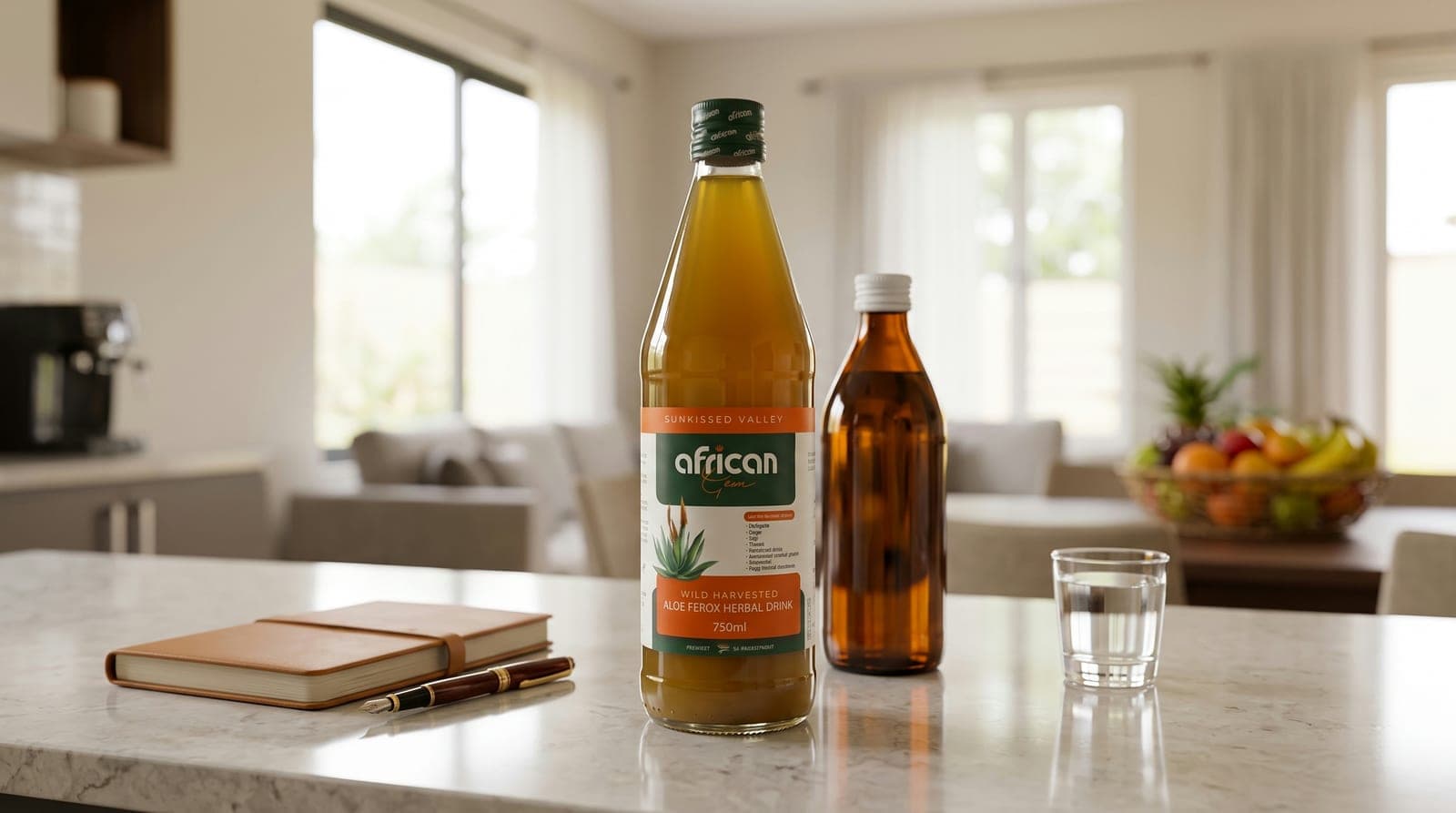
The product is a 750ml Aloe Ferox herbal drink at ₦15,500, registered under NAFDAC A7-102608L, sold by unrelated retailers on the open market at comparable prices. Retail margin is the first published earning method and needs no downline. The compensation plan is published in full text, rates and qualifying conditions together, with no projections anywhere in it — and we deliberately publish no income figures, for the reason in point six. The smallest package is one bottle, so testing this costs about what a night out does.
We are an official distributor rather than the manufacturer, which is worth knowing when you are deciding who you are dealing with.
The uncomfortable part
Most people who join direct-sales businesses do not build large teams. That is true of this category everywhere, not a fact about any one company, and any honest page should say so.
What that means practically: judge the opportunity on whether the retail side works on its own. If you would be content selling the product to people who want it, and anything beyond that is upside, you are thinking about it correctly. If the plan only makes sense to you when you imagine a large team, you are relying on the least likely outcome.
Take the checklist to whoever is talking to you. A company worth joining will answer all nine without flinching.
If you want to see how ours reads against it, the distributorship page has the packages and what registration involves, and is African Gem legitimate answers the scepticism directly.