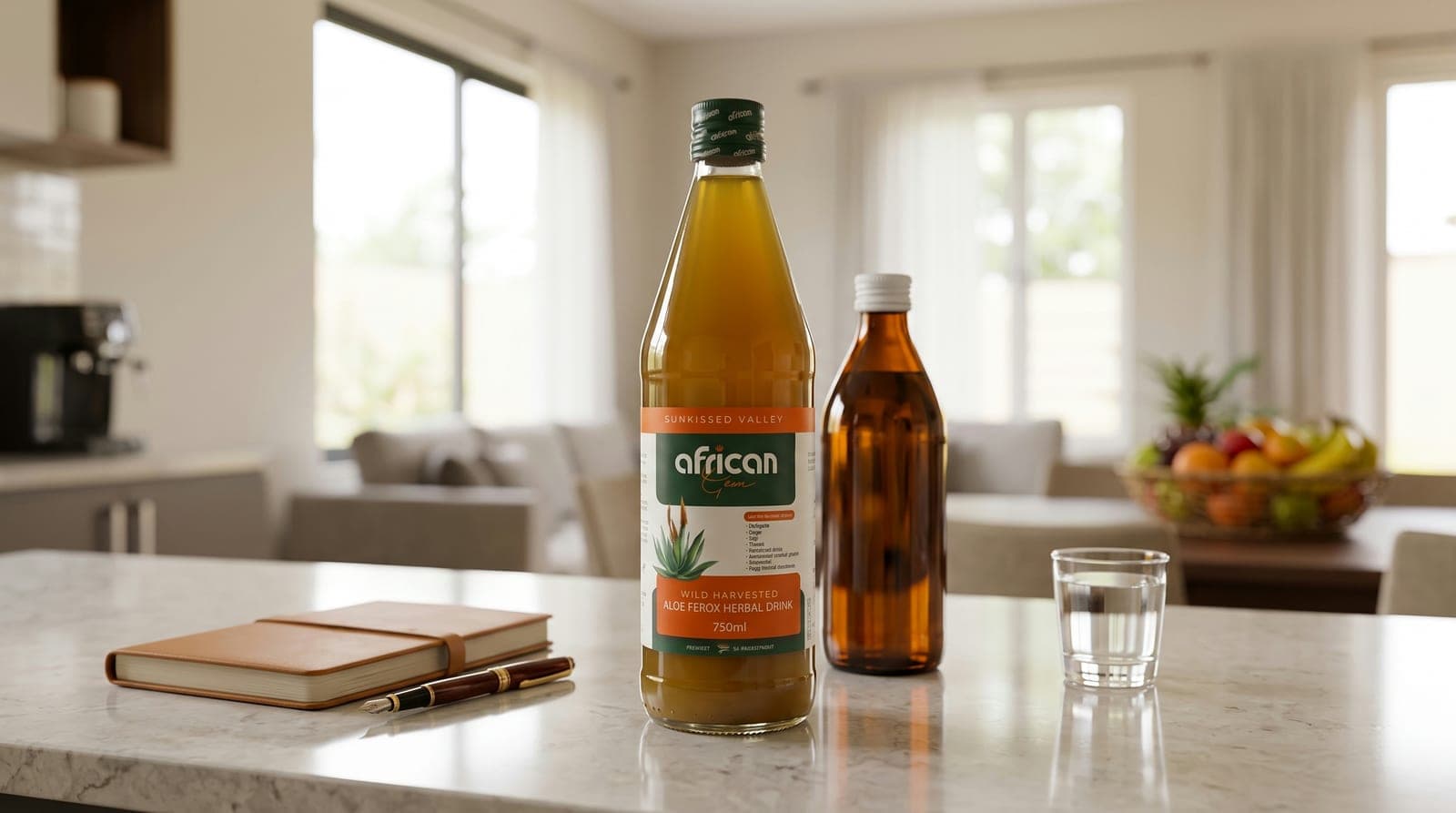
How to sell a herbal product in Nigeria without overpromising
18 August 2026 · 7 min read
The rules are stricter than most sellers realise, and the sellers who last are the ones who never needed to break them. What you may say, what you may not, and what actually works.
There is a version of selling herbal products that works for about six months. You tell people the product fixes whatever they have just told you about, sales come quickly because you are answering exactly the thing they are worried about, and then at some point a regulator, a platform or a customer's family asks a question nobody can answer well.
There is another version that starts slower and does not have that ending. This is about the second one.
Whether you sell a herbal drink, a tea or a capsule, whether you sell it in a shop or on WhatsApp, the constraints are the same and most sellers only meet them after they have already said something they should not have.
The line you cannot cross, stated plainly
In Nigeria, a product registered as a supplement or a herbal preparation may not be advertised as a remedy for any named illness. Not in a caption, not in a voice note, not "my customer said it, not me".
That is not a stylistic preference. NAFDAC's rules on herbal advertisement are explicit, and the platforms enforce their own version on top: health claims are among the fastest routes to a disabled ad account or a removed listing.
The practical consequence catches people out. You may not name a condition and imply the product addresses it. That includes replying "yes" when a customer asks. The question "will this help my [condition]" is the single most common message any herbal seller receives, and answering it directly is the most common way sellers get themselves into trouble.
What to say instead, and you can use this almost verbatim:
I am not able to advise on medical conditions, and I would not want to guess with your health. What I can tell you is what is in it and what it is made for, and if you are managing something specific, please check with your doctor or pharmacist first.
That answer loses you a small number of sales. It also means you never have to defend a claim you cannot support, and customers hear it as honesty because it is.
Why the honest version outsells the other one anyway
The claims that convert fastest are borrowed. Anyone can say a product fixes something. Nothing in that sentence belongs to you or your product, which is exactly why every competitor uses the same one.
What cannot be copied is specifics. What is actually in the bottle, where it came from, how it is made, what the registration number is, what it costs per millilitre against the alternative. That is the ground where a genuinely good product wins and a bad one cannot follow.
It also changes who you attract. Disease claims attract people in difficulty who are hoping, and hope is a poor foundation for a repeat customer. Constituent-and-origin selling attracts people who are choosing, and people who chose deliberately reorder.
What you may say
Plenty, once you stop reaching for the forbidden thing:
- What is in it, by name. Constituents are facts. For the African Gem drink that is Aloe Ferox, Sutherlandia, African Potato, Wild Olive, Wild Dagga and St. John's Wort, six botanicals, and each has a traditional-use story that is interesting on its own.
- Where it comes from. Wild-harvested in the Western Cape, bottled in South Africa, exported along a trade route that has run since 1716. Provenance is a genuine differentiator and entirely safe to state.
- General wellbeing language. Everyday energy, digestion comfort, immune support, general wellness. Broad, honest, permitted.
- The registration number. NAFDAC A7-102608L, printed on the bottle. Say it and invite people to check it.
- The price, plainly, including per millilitre. Most sellers hide price until late. Leading with it filters out people who were never going to buy and builds trust with everyone else.
- Your own experience, as your own experience. "I have taken this every morning for a year and I like how I feel" is a personal account, not a claim about disease.
What actually works, practically
Beyond the compliance question, the mechanics of selling this in Nigeria come down to a few unglamorous things.
Use it yourself, visibly and for long enough to have an opinion. The most persuasive thing about any seller is that they are obviously a customer. It is also the only way you will answer questions well.
Sell one bottle before you sell a case. People buy small to test. Pushing a large package at someone who has never tasted it is how you end up with one sale and no second one. The drink is bitter, genuinely, and some people will not take to it. Better they discover that on one bottle than six.
Say the bitter part out loud. Tell people before they taste it. A seller who warns you about the downside is believable about everything else, and the ones who hide it get a refund request and a bad review.
Follow up at the right moment. A 750ml bottle lasts most people a few weeks. That is your calendar. A message when someone is running low is service; a message every three days is why people mute you.
Sell to people, not to your contact list. Broadcasting to everyone you have ever met produces a little noise and a lot of muting. Talking properly to five people who might actually want it produces customers.
Keep your receipts and your stock straight. Know what you have, what you paid, and what you sold. The most common way people lose money in this business is not fraud, it is never quite knowing where they stand.
The claims your customers will repeat
Something worth preparing for: your customers will make claims you did not.
Someone will say the drink did something remarkable for them, in a group, in writing, with your name attached. It is well meant and it is a problem, because a claim made in your selling context can attribute to you.
The move is not to argue with them publicly. It is to add your own line underneath, every time, without drama: "Really glad you are feeling well. Just so everyone knows, this is a wellness supplement, it is not intended to diagnose, treat, cure or prevent any disease, and anyone managing a condition should talk to their doctor."
Say it every single time. It costs nothing and it is the difference between a business and an incident.
If you are selling as a distributor
Two additions if you are selling under a compensation plan rather than simply retailing.
The income rules mirror the health rules. You may not promise earnings, publish income examples, or post screenshots of payouts, for the same reason you may not promise health outcomes: they are unrepresentative and they read as a guarantee. Point people at the published compensation plan and let the structure speak.
Earnings depend entirely on your own effort, skill and time — no income is guaranteed. This is a product-distribution opportunity, not an employment offer or investment.
Recruit slower than you want to. Someone you sign up who never sells is worse than nobody, because they have spent money on your recommendation and got nothing back. Sell product first, and let people ask you about the business when they notice it working.
The short version
Say what is in it. Say where it came from. Say what it costs. Say the registration number and invite the check. Refuse the disease question kindly, every time, including when saying yes would be easy.
That is a slower business and a much longer one.
If you want the detail on what we sell: the product page lists every constituent, and the distributorship page covers selling it formally. If you are still deciding whether this category is for you at all, nine things to check first is the piece to read before you pay anyone.